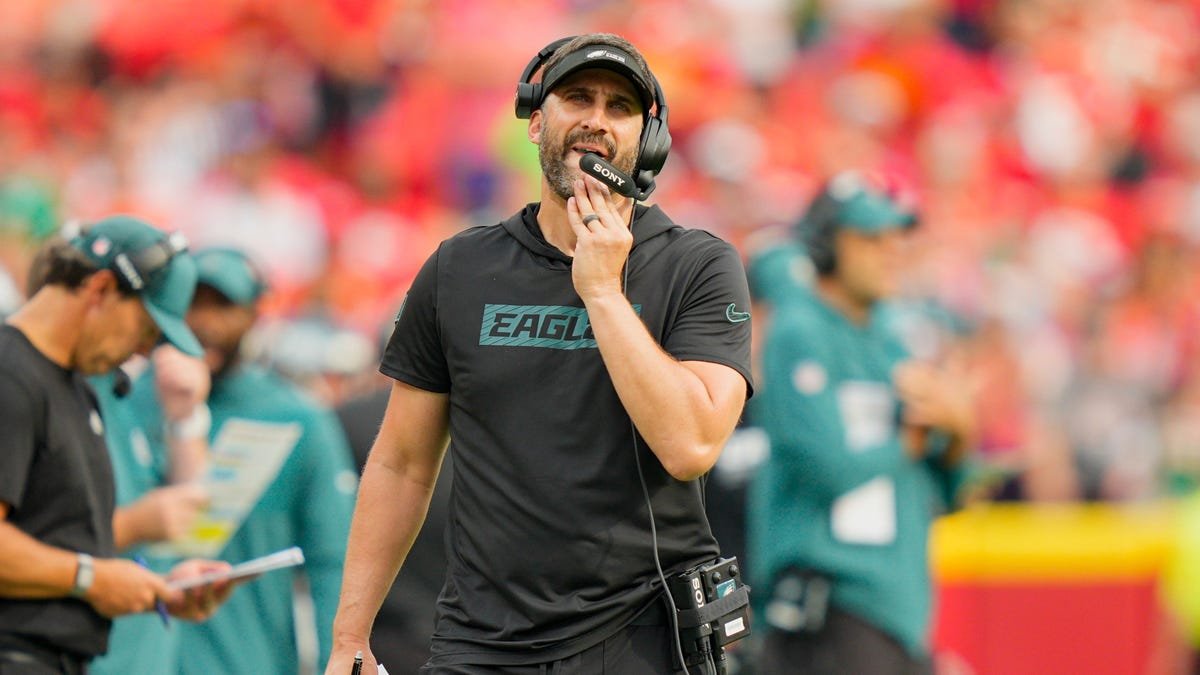
Nick Sirianni’s recent win places him in rare air, further disproving theories he is carried by a great organization.
One of the most satisfying things about discussing this game we love is that there is never a shortage of topics. The Philadelphia Eagles play in a large media market for one of pro football’s most demanding cities and fan bases. Stop us if you have heard that before or if any of that sounds relatively familiar.
Let’s say, we’re never short of a few angles and outlandish theories, but there’s a flipside to that coin. Sometimes, stories take a backseat to a few others that seem more pressing, but it’s of the utmost importance that we discuss Nick Sirianni’s most recent win as this team’s head coach in further detail.
Nick Sirianni’s 50th win as Eagles head coach places him among some well-known NFL legends.
The days and hours that followed the Eagles’ second win of the season were spent as you’d expect. Deeper dives were given to immediate takeaways, the players who shone, and the guys who didn’t. There was a need to address popular conversations, such as stagnant offense.
The days that follow an Eagles win are about conversations that are born from what we just witnessed, but they’re also about looking ahead to next week. Still, we have to mention Nick Sirianni’s success for a second.
Following Philadelphia’s win over the Kansas City Chiefs at Arrowhead Stadium, Coach Sirianni’s record stands at 50-20 after his first 70 games. John Gonoude, the Eagles’ Director of Football Communications, offered a deeper dive into how good he has been. Try this on for size:
“According to Elias Sports, Sirianni is the seventh head coach in NFL history to reach 50 career wins in 70 games or less, joining Paul Brown (58), George Seifert (62), Guy Chamberlin (64), Chuck Knox (65), Vince Lombardi(66), and Don Shula (69).”
Gonoude also mentions that Sirianni’s career .714 winning percentage places him ahead of George Allen (.712, 1966-77) for the second-best winning percentage by a head coach during the Super Bowl Era with a minimum of 50 games on his resume. He now only trails one man, the late, great John Madden, who notched a .759 winning percentage between 1969-78.
The debate is over. Nick Sirianni is a phenomenal head coach and should be treated as such. Yes, he should consider drinking decaffeinated coffee. Yes, he’s the beneficiary of being part of one of the NFL’s best-run organizations, but coaches still have to coach, and no one who would have been ‘carried’ would have been able to fake it for so long.
He may not have been the elite play-caller or the X’s and O’s guy, but give this guy his flowers and it’s roots (pun intended). Nick Sirianni knows what he is doing, and his players will run through a wall for him. That says it all, and it’s time to discuss this guy’s talent in further detail.
NEW YORK — The modus operandi at Barclays Arena all season has been facing adversity. Head coach Sandy Brondello brings it up often. Jonquel Jones reiterated it on Tuesday.
That doesn’t magically disappear because the playoffs are here. The New York Liberty are back on the injury merry-go-round, awaiting news about whether Breanna Stewart will be available for Game 2 on Wednesday (8 p.m. ET, ESPN) against the Mercury. The No. 5 Liberty can advance to the semifinals with a win over No. 4 Phoenix.
Advertisement
“We’ve done a really good job in the season of staying together and learning from it and being in that position,” Jones said after practice at Barclays Arena on Tuesday. “So it’s not like we’re in the playoffs and it’s a new position for us.”
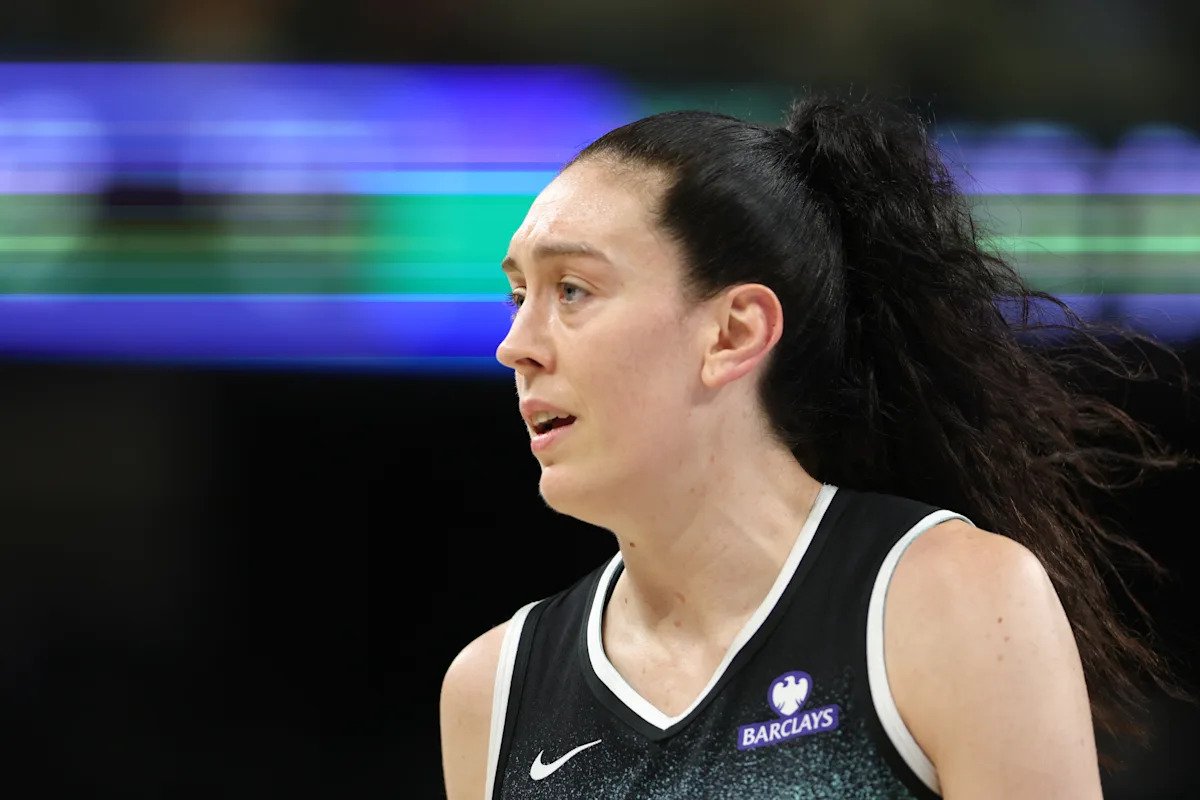
Stewart did not participate in practice on Tuesday and is a “game-time decision,” Brondello said. The veteran forward injured her left knee in the Game 1 overtime win on Sunday and underwent an MRI on Monday. Brondello said those scans were “relatively clean.” In the open media portion of practice, Stewart was in a leg sleeve without a brace and stayed back with Brondello, briefly talking and pointing out a call with assistant coach Olaf Lange. She was not available to media.
“She’s tough,” Brondello said. “Any player that you’ve had injuries before, I think one of her superpowers is her mental toughness. If she’s able to go, she’ll go.”
Injuries are nothing new for Breanna Stewart and the 2025 New York Liberty. (AP Photo/Darryl Webb)
(ASSOCIATED PRESS)
The Liberty were without the three-time WNBA champion for most of August while she rehabbed a bone bruise in her right knee. It was the same knee she underwent a scope on in March after the inaugural season of Unrivaled, the 3×3 league she founded with Napheesa Collier.
Advertisement
“Stewie’s in [or] Stewie’s out, we’re ready to go,” Brondello said. “We know what’s at stake here. We’ve got to be a desperate team and take care — we don’t want to go back to Phoenix. But they’re going to come hungry. We know that.”
Kennedy Burke stepped into Stewart’s spot with the starters during a drill at the end of the open media portion of practice. And Emma Meesseman, the Liberty’s late-season acquisition, will see more time if Stewart can’t play. The 2019 Finals MVP with Washington had an off shooting day on Sunday, making one of six attempts.
Meesseman started 10 of the games Stewart missed after she arrived from Belgium. She became the first two-time EuroBasket MVP in March after leading the country to the title, and spent time after team practice working with the men’s practice team in 3-on-3 reps.
“I’ve been in a situation before where you lose one of the key players, or they’re not really healthy, but then I think it’s a job of the whole team and staff and everybody to make sure that you have 12 players ready to take that role,” Meesseman said. “So it shouldn’t matter. I mean, obviously, she’s a great player, and we do depend on her. But it shouldn’t make or break a result or a season in the end.”
Advertisement
Not on this team that’s cycled through a rolodex of different lineups while trying to manage injuries to its big three and most of its frontcourt, plus various other absences. When Meesseman arrived, nearly the entire frontcourt was on the availability report. Jones missed 13 games earlier this season with an ankle injury. Sabrina Ionescu missed time late in the season with a toe injury. Natasha Cloud, the scoring leader of Game 1, also missed a few games.
Only reserve guard Marine Johannes played in all 44 regular-season games. She did not play in Game 1; with the exception of one minute for Rebekah Gardner, Brondello leaned exclusively on her starting five, Meesseman and Burke.
“We understand that, you know, everybody that’s stepping onto the court has experience now,” Jones said. “There is no excuses, there is no learning curve. We just kind of move on from it.”
Advertisement
The Liberty are 13-0 when their big three of Stewart, Jones and Ionescu start and finish a game. Otherwise, they’re 15-17. It plummeted their season from a 9-0 start to a fifth seed that will have to potentially go through three MVP contenders to win a repeat championship.
The Mercury are led by Alyssa Thomas, who missed a game-winning open layup in the final seconds on Sunday. Awaiting in the semifinals could be No. 1 seed Minnesota and Napheesa Collier in what would be a 2024 Finals rematch. And in the Finals, New York could meet No. 2 Las Vegas and three-time MVP A’ja Wilson, a rematch of the 2023 Finals.
Stewart, a two-time Finals MVP, is the vocal and emotional leader of the Liberty. Her impact on the defensive end was felt in her absence, and it will be a detriment to New York if she can’t play on Wednesday. Jones said the team felt Game 1 against Phoenix “almost felt more physical than the Finals last year” as both teams shored up defensively.
“That’s a team that was playing at home, essentially had the advantage, and now they’re gonna come in here and they’re gonna be even more desperate,” Jones said. “So the level of physicality is probably going to be cranked up even more.”
Advertisement
Mercury head coach Nate Tibbetts said before Game 1 tipped off that either way, it was Game 2 that would be the biggest of the playoffs for both sides.
The Liberty won the rebounding battle, a key for a team that lacked effort on the boards. But they will need to clean up the turnovers against a hungry group trying to keep their season alive. Brondello stated the obvious ahead of Game 1: that whoever scores more points will be the winner. Each possession is valuable, something the Liberty have struggled with for much of the year.
As Jones noted, Game 1 really could have gone either way. She missed a gimme, and her former teammate Thomas did the same on the other end. They played together in Connecticut as the winningest group of that period to have not won a championship. Thomas still has not won one. Jones surveyed the mountaintop last year, and said on Tuesday she feels the team’s confidence is about the same as it was when they began that summit as the No. 1 seed last year.
Advertisement
It’s a new environment for this group to be a lower seed. But it’s old hat for them to head into a major matchup not knowing who is available.
“We’re not seeing anything that we haven’t seen,” Ionescu said. “And I think when we were talking about beauty and struggle during that time, it’s kind of paid off to a moment like now, when there’s uncertainty and you’re not sure what’s going to happen. But this group has been able to continue to find different combinations and play with one another, and have built great chemistry.”
Justin Boone won the FantasyPros Most Accurate Expert Award in 2019 and has eight top-10 finishes in the competition. He now brings his rankings acumen to the Yahoo Fantasy audience after joining the team as an analyst.
Be sure to follow the links below to see his latest rankings at every position. Updated rankings, including PPR, are released Thursday, with the final version coming down Sunday morning.
Justin Boone won the FantasyPros Most Accurate Expert Award in 2019 and has eight top-10 finishes in the competition. He now brings his rankings acumen to the Yahoo Fantasy audience after joining the team as an analyst.
Be sure to follow the links below to see his latest rankings at every position. Updated rankings, including PPR, are released Thursday, with the final version coming down Sunday morning.
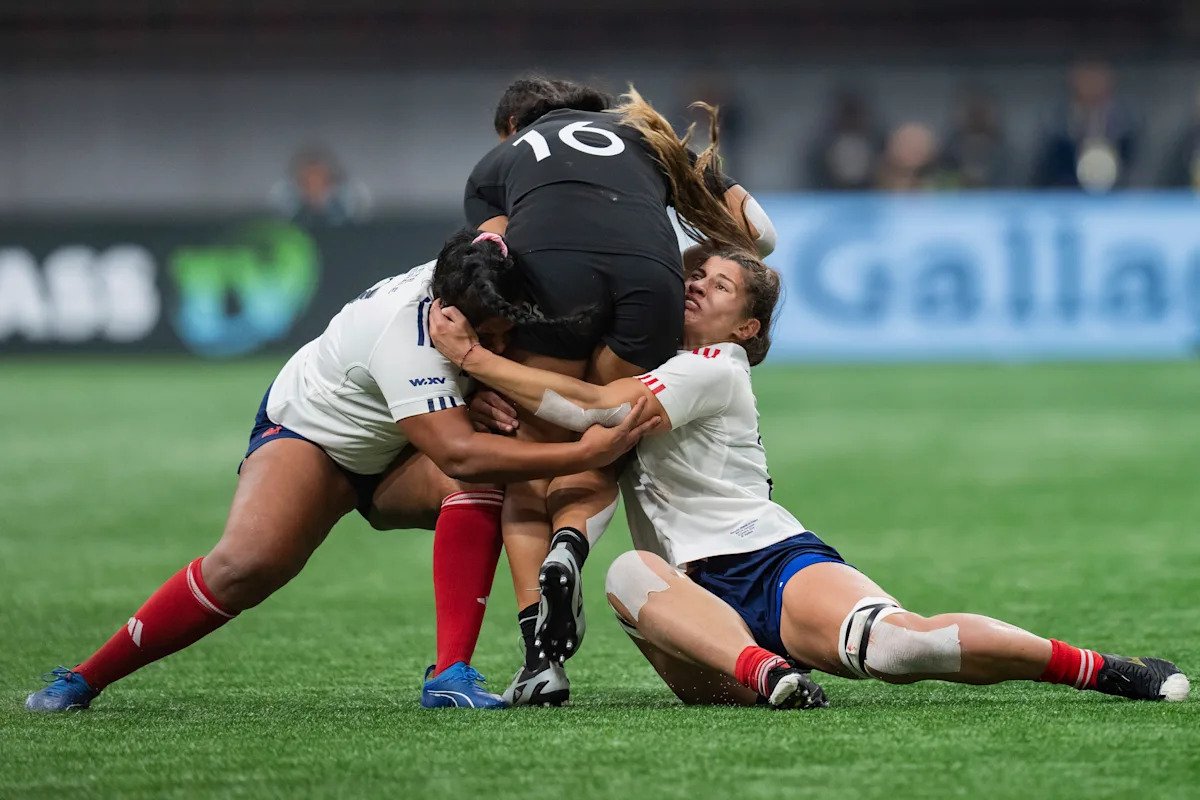
LONDON (AP) — France captain Manaé Feleu and flanker Axelle Berthoumieu will miss the Women’s Rugby World Cup semifinal against England after failing to overturn their suspensions on Tuesday.
The double blow to France’s title hopes followed Berthoumieu’s nine-match ban for biting and Feleu’s three-match ban for a dangerous tackle in their 18-13 quarterfinal win over Ireland on Sunday in Exeter.
Advertisement
Both players appealed their suspensions, and Berthoumieu got hers reduced from 12 weeks to nine because of her admission, clean disciplinary record, remorse and public apology.
Feleu’s original ban was upheld.
The French forwards will miss the semifinal on Saturday in Bristol and the rest of the World Cup.
Feleu has been one of France’s best at her second World Cup. One of her suspended games will be cut if she completes World Rugby’s tackle school.
Berthoumieu admitted to biting the arm of Ireland’s Aoife Wafer in a ruck. The initial disciplinary committee said that from video footage “the player appeared to nudge Ireland No. 7’s forearm twice before she bit her, suggesting an intention to bite the Ireland player, and two opportunities to stop and not continue with a bite not taken by the player.”
Advertisement
While the incident was picked up on video review during the game, Berthoumieu was allowed to play on.
World Cup competition director Yvonne Nolan defended the Television Match Official’s failure to rule on the incident at the time.
“These types of incidents are notoriously difficult to deal with in game, so I recognize that people will review screenshots and so on and have their own views but I would caution that these incidents are really rare,” Nolan said Tuesday at the tournament’s weekly press conference.
“I don’t think I’ve ever seen a biting incident being dealt with in game. They almost always require additional information after the game, so that usually includes interviews with the player,” Nolan added. “It includes ruling out things like accidental contact. They also need to establish the force of the contact, so a detailed statement from the player is typically needed.”
Advertisement
The process also entails inspection of the wound.
“Sometimes even dental evidence becomes relevant,” Nolan said. “So I would just say a word of caution that jumping to a conclusion on removing a player … unless the evidence is really categoric in game it can be extremely challenging. And that’s what the citing process is for. The right process has been gone through.”
If Week 1 felt like chaos, Week 2 doubled down with injuries, breakout performances, and some surprising redemption arcs. Just like fantasy football managers comb the waiver wire for hidden gems, savvy collectors should be watching eBay and auction sites for the same opportunities. For a full of Rookie Silver Prizm PSA 10 prices visit our pre-season
Here’s who to buy, who to sell, and who to stash after Week 2.
Advertisement
Category 1: Injury Fallout and Opportunity
Joe Burrow (Toe Surgery)
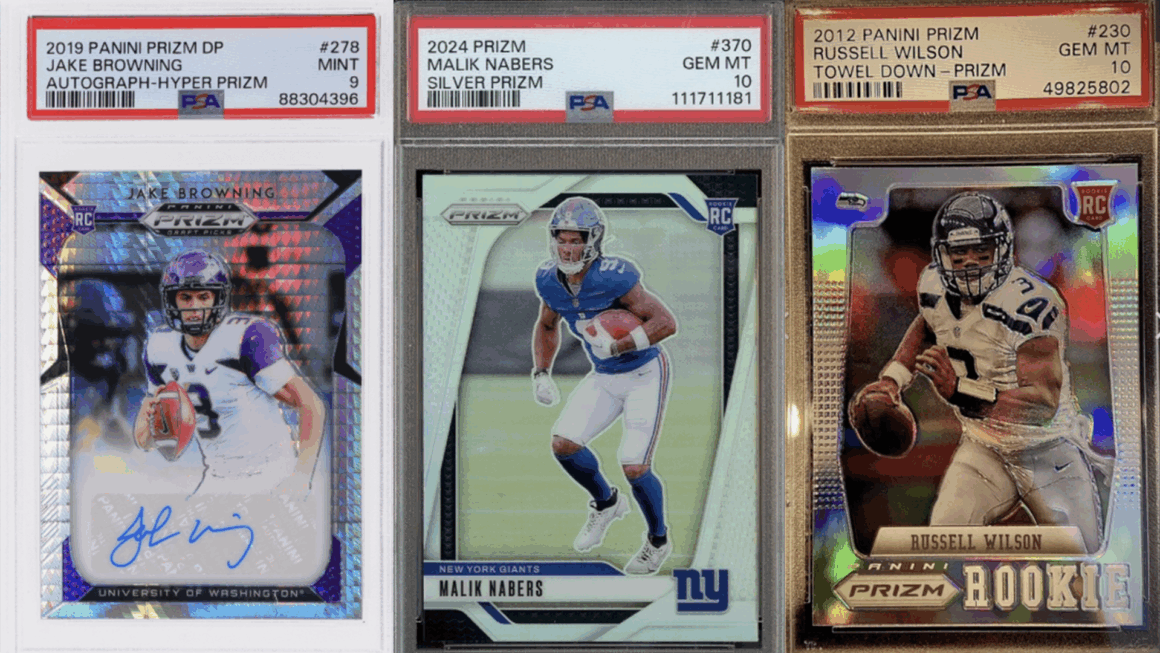
Pre-season PSA 10 Prizm Silver: $1,700
Burrow’s foot surgery sidelines him for roughly three months. His long-term value is safe, but collectors may see panic selling in the short term. If prices dip below his pre-season price, it’s a rare buying window for one of the hobby’s true blue-chip QBs.
Jake Browning (Next Man Up)
Rookie Prizm Draft Picks Autos: <$100
Browning stepped in with nine games under his belt from 2023 and 12 TDs on record. He’s not Burrow, but he’s shown he can keep Cincinnati competitive. His true rookie supply is limited, making Draft Picks autos one of the only viable plays — and still cheap enough to gamble on.
Advertisement
Brock Purdy (Toe Injury)
Pre-season PSA 10 Prizm Silver: $433
Purdy is expected to miss at least a few weeks. Luckily, San Francisco can lean on Mac Jones in the short term, but collectors should watch Purdy’s prices closely. If his PSA 10 Prizm Silver dips into the $300 range, it could be a smart long-term buy for a QB who’s already proven he can win at the highest level.
Mac Jones (Second Chance Spotlight)
PSA 10 Prizm Silver: Basement prices after New England flameout
Jones flashed signs of life with 279 yards and 3 TDs last week, and now he’s back in the spotlight while Purdy recovers. He’s not a buy just yet, but if San Francisco keeps winning with him under center, his once-forgotten rookie cards might see a bump.
Advertisement
Category 2: The Redemption Arcs
Daniel Jones
Pre-season PSA 10 Prizm Silver: $60
Jones exploded in Week 2 with 300+ passing yards and his third rushing TD. His cards are already climbing, but relative to other QBs, they’re still cheap. If the Colts keep winning, collectors may re-rate Jones fast.
Russell Wilson
2012 PSA 10 Prizm Silver: trending +$100 over pre-season
Wilson leads the NFL in passing yards (588 through two games), but the Giants are 0–2 with KC and LAC up next. If the Giants collapse, his run could end quickly. This feels like the right time to sell into strength before the wheels fall off.
Category 3: The Breakouts
Rome Odunze
Pre-season PSA 10 Prizm Silver: $88
Odunze hauled in 128 yards and 2 TDs on 11 targets in Chicago’s shootout loss. Despite back-to-back big games, his market hasn’t moved much. If you can grab his Silver Prizm PSA 10 for anywhere close to $100, he could be a fantastic flip later this season.
Advertisement
Malik Nabers
Pre-season PSA 10 Prizm Silver: $194
Nabers delivered a true breakout game with 167 yards and 2 TDs on 13 targets in a primetime duel with Dallas. If you can find his PSA 10 Prizm Silver for under that $194 pre-season level, he’s a strong long-term hold and potential star-in-the-making.
Category 4: Rookie Flyers
Elic Ayomanor
The Stanford product made a and scored a TD on 56 yards. He and QB Cam Ward are showing chemistry, and his that the upside is huge if he keeps it up.
Cam Skattebo
The workhorse RB had 59 yards and a TD on 13 touches. He’s fighting for a true RB1 role, but his violent running style is hobby-friendly. If he claims the job, today’s $75 price tag could look like a bargain.
Advertisement
Bottom Line Strategy
Injury Watch: Burrow and Purdy could be buy-low plays if panic hits.
Replacement Play: Browning and Mac Jones both step into short-term spotlight roles.
Value Climbers: Daniel Jones, Rome Odunze, and Malik Nabers are prime opportunities before the market catches up.
Sell High: Russell Wilson’s window may be closing fast.
Lottery Tickets: Ayomanor and Skattebo are cheap rookie darts worth throwing.
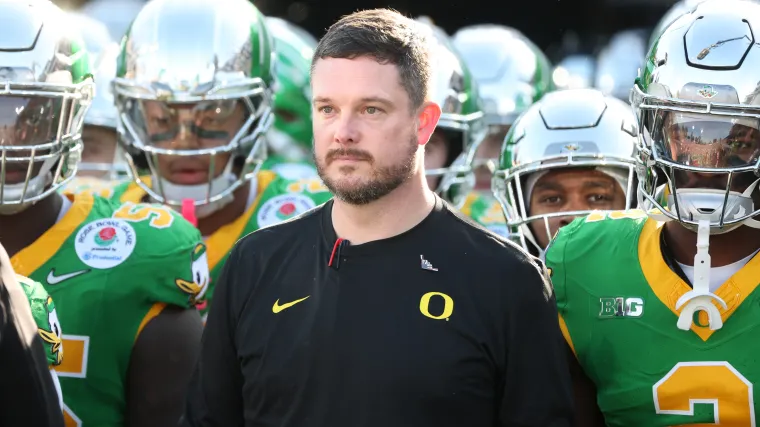
Oregon cruised to a 34-14 victory at Northwestern on Saturday, improving to 3-0 overall and 1-0 in the Big Ten. Yet head coach Dan Lanning made it clear he was far from satisfied with how the game ended.
After dominating their first two nonconference opponents by an average of 56 points, the sixth-ranked Ducks entered their league opener with momentum.
They built a 31-point cushion through three quarters but were outscored 14-3 in the final frame. Lanning said Sunday that the late effort did not meet program expectations.
“Still disappointed. Yeah, disappointed in the way we finished. We want to be a team that wins in the fourth quarter,” Lanning said at his weekly press conference. “Regardless of who’s in, what the situation is, you want to be able to take advantage of those moments. We had the ball down tight to the red area and had to settle for a field goal. Not able to punch that in, and then we give up two scores late. That’s not something we want to do.”
Much of the fourth quarter was played with Oregon’s reserves, but Northwestern took advantage. The Wildcats outgained the Ducks 174-47 in the final period after being held to 139 total yards through the first three.
Northwestern scored twice in the final six minutes, first on a one-yard run from Caleb Komolafe and then on a 79-yard burst by Dashun Reeder. Those drives followed an Oregon field goal from Atticus Sappington and a three-and-out series by the backups.
Overall, Oregon was held to 373 total yards after piling up 506 and 631 in its first two games against Montana State and Oklahoma State.
While the outcome was never in doubt, Lanning doubled down on his demand for a complete performance.
“We were able to do that the first three quarters and didn’t do it in the fourth,” he said.
For Lanning, the scoreline mattered less than the standard, and he made it clear that Oregon must learn to finish games if it hopes to contend in the Big Ten.
Super subs combine to put Arsenal in control late on in Bilbao ⏰
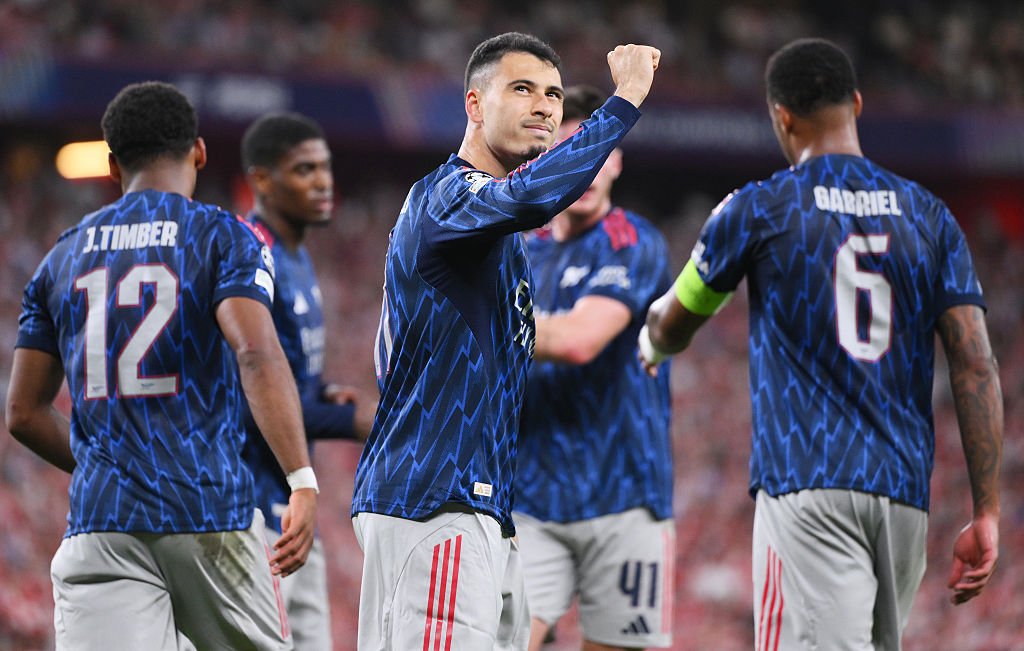
Gabriel Martinelli has been the subject of much criticism in recent times but he's stepped up off the bench to give Arsenal a crucial late lead away to Athletic Club.
The Brazilian had been on the pitch for just 36 seconds when he stuck the ball past Unai Simón to silence the home crowd in Bilbao.
It was a brilliant goal from the Brazilian, who latched onto a pass from fellow sub Leandro Trossard to race through and compose himself before slotting home.
⏰ 65’: Leandro Trossard is substituted on ⏰ 71’: Gabriel Martinelli is substituted on
There were just 36 seconds between Gabriel Martinelli coming on for Eberechi Eze and the Brazilian opening the scoring for Arsenal.
Only one substitute last season (Ademola Lookman vs Club Brugge – 35 secs) scored quicker after coming off the bench in the 2024-25 campaign #UCLpic.twitter.com/j6pBBKV1Gg
June 5th, 2005. It wasn’t a normal morning in the life of a 15-year-old boy. I was woken by a gentle knock at my bedroom door, wiped the sleep from my eyes and tiptoed downstairs to a pitch-black living room.
My father fumbled for the buried television remote as I sat cross-legged on the floor, squinting at the screen as it zapped to life, adjusting my vision.
Advertisement
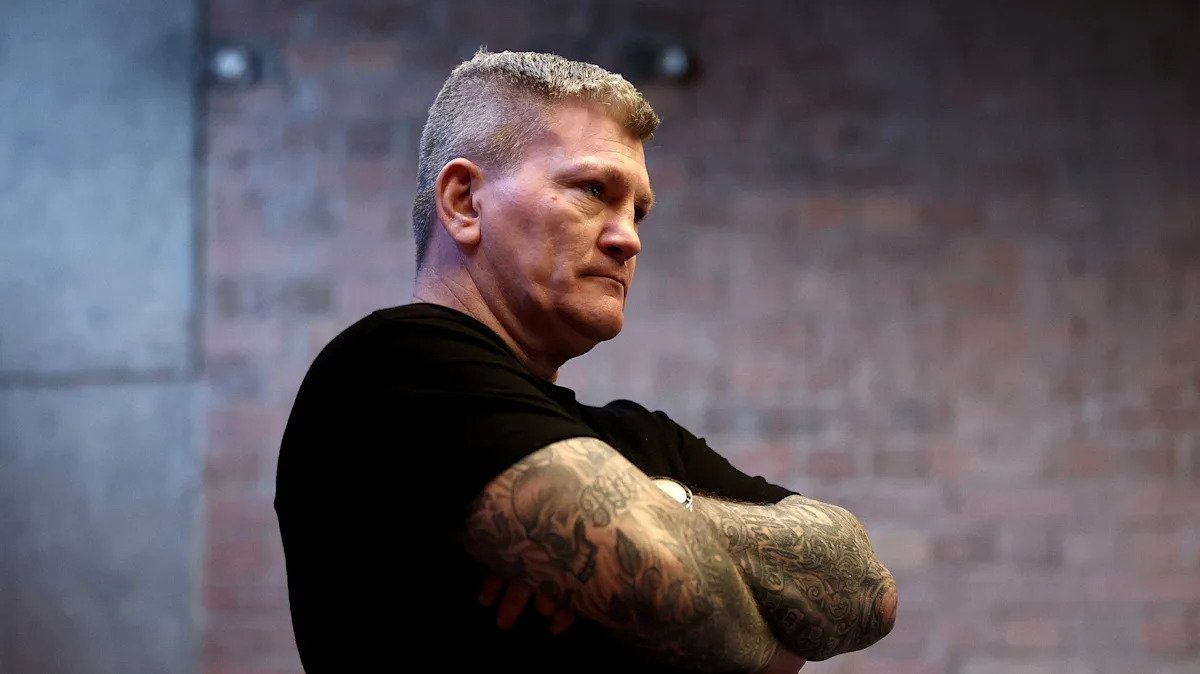
The timing was impeccable. A papered blue moon penetrated the middle of the screen and my hero, a hooded Ricky Hatton, waited to burst through it and make the 39th ring walk of his professional career.
The hairs stood up on the back of my neck. The atmosphere inside the electric M.E.N Arena, Manchester, England could be felt anywhere in the country by means of a British boxing osmosis.
Hatton was challenging Kostya Tszyu for the IBF and Ring Magazine titles at junior welterweight in a fight that would go on to define his career. It was an appointment viewing.
We traded predictions. I can’t recall how either of us saw the fight playing out. My youthful loyalty and blind patriotism probably called an early Hatton knockout. My father’s more measured, logical thought-process would have swayed toward the champion riding the Manchester storm with professional ease.
Advertisement
After all, Tszyu wasn’t an ordinary opponent. A unified world champion, considered a top three pound-for-pound star, the 35-year-old’s name struck fear. The Australians and Russians revered him, the Americans respected him, Britons feared him. He had flattened Zab Judah, stopped the legendary Julio Cesar Chavez and was on a nine-fight winning streak as a world champion. He was the finished article.
Hatton, by contrast, was seen by many as too raw, too untested, too ordinary to breach the fortress that Tszyu had built at 140 pounds — 38-0 and unbeaten, but too long spent navigating the bizarre and sometimes laborious waters of a WBU (World Boxing Union) title reign. Hatton was a betting underdog, but only slightly. Timing is everything in boxing — for fighters, yes, but especially for matchmakers — and his promoter, Frank Warren, timed this pick to perfection.
“When you look at the all-time 140-pound greats, Tszyu’s right up there,” Hatton told Boxing News magazine in 2011. “Nobody — and I mean nobody — gave me a chance of winning. They thought, ‘Ricky, with his leaky defense, he’ll walk onto that right hand; he can get cut … Kostya Tszyu just hits too hard’.
“It was only me and my trainer, Billy Graham, who thought I could win. We used to sit on the steps at the Phoenix Camp — I’d have a cup of tea, Billy would have a smoke — and the advice he was giving to beat Tszyu, I thought, ‘He’s got it spot on again here,’ but no one else shared our enthusiasm.
Advertisement
“I got in the ring, and you’d have thought there was a speaker underneath it because it was vibrating,” he continued. “I kept telling myself, ‘Don’t let your arse go now,’ and I was looking across at Tszyu thinking, ‘Everyone believes you’re going to destroy me, but you’ll need an Uzi to stop me tonight.’”
June 4, 2005: Ricky Hatton (L) punches Kostya Tszyu during their IBF junior welterweight title fight in Manchester, England.
(John Gichigi via Getty Images)
Hatton refused to fight as a traditional underdog. It wasn’t in his psyche. Hunger. Relentless energy. Bravery. These were the traits that defined him. From the first bell, he smothered the champion, refusing to give him space to breathe, never mind detonating his legendary right hand.
The capacity crowd shook the rafters with every breath. Every punch was felt by my father and I just as vividly, despite sitting 200 miles from that Manchester cauldron. I’d shuffle closer and closer to the television screen, eyes sucked in like a whirlpool. My father would brace himself, balancing on what felt like millimeters of the sofa’s edge.
Advertisement
Round after round, Hatton pressed, mauled and hammered. He ate punches, yes — but he gave them back in abundance, furious clusters accompanied by his infamous verbal shrieks as he unloaded. He bounced forward like a man unwilling to contemplate a step backward. By the halfway mark, Tszyu’s aura had begun to crack. By the 10th, the once-invincible champion looked weary.
Then came the moment: At the end of the 11th round, Tszyu sat down on his stool. And he stayed there. No 12th round, no final stand. One of boxing’s great warriors had enough. It would be the last time the world saw the “Thunder from Down Under” inside a boxing ring.
Ricky Hatton was the new IBF junior welterweight champion of the world. The arena exploded. Grown men weeping, kids — kept awake by a sporting promise and enough soda to sink a small ship — held aloft to grab an unobstructed view, and families hugging, bouncing in unison.
Back in west London, we were both standing in awe, mouths agape. Birdsong had begun in the garden, a time foreign to me was displaying on the clock, but this was no dream. “There’s only one Ricky Hatton” reverberated around the M.E.N. Arena, and it was impossible to ignore the urge to sing along.
Advertisement
British boxing was overdue for a new king, and this was his coronation.
The following morning, my life changed forever. My father took his own life following a short, but vicious fight against depression.
Suddenly, the world looked a different place.
In the years that followed, watching Hatton fight became a comfort to me. A blanket of violence I could wrap myself up in, distracted from the harsh realities of the surrounding world I wrestled to understand.
A four-fight win streak following Tszyu’s dethroning saw Hatton cross paths with the No. 1 fighter in the sport: Floyd Mayweather Jr.
Now accustomed to staying up until the wee hours, 2007’s Mayweather fight allowed me to pass the Hatton-baton onto my friends. Following a birthday party, I gathered the troops, marched us all home — via a kebab shop, almost in tribute to “The Hitman” — to collectively watch the fight billed “Undefeated,” all through intoxicated eyes.
Advertisement
Mayweather was the one to stay undefeated on an evening where the Mancunian had taken well over 20,000 fans to Las Vegas in support; the Hatton bug was spreading at an unrelenting pace. But Hatton, himself, struggled to keep up.
Hatton would only win twice more, against Juan Lazcano and Paulie Malignaggi, and in his subsequent fight, a brutal Manny Pacquiao left hook from the gods sent him spiraling. These two defeats broke him.
“I was so down, I was crying and breaking out and contemplating suicide,” Hatton told the BBC in 2011. “I was getting depressed. Depression is a serious thing and, after my defeat to Manny Pacquiao, I contemplated retirement and didn’t cope with it very well.”
Advertisement
“A lot of people say, ‘I’ve tried committing suicide’ — but there’s saying it and doing it, and it was coming on a regular basis. People don’t realize how deadly [depression] can be.”
Hatton returned to the ring, as a professional, for one final time, a year after this candid interview, against Ukraine’s Vyacheslav Senchenko. It was the Manchester homecoming that the then 34-year-old craved so badly, and he started the proceedings as a heavy betting favorite against a man who had suffered an exposing TKO defeat to Malignaggi earlier that year.
As a broke graduate in my early 20s, I felt compelled to make the trip north for Hatton’s would-be swan song. An overnight coach landed myself and a friend in Manchester to soak up the entrancing atmosphere that flooded the city center. There was expectation in the air, a belief that Hatton 2.0 could rule again, but for me, it felt more like closure.
Hatton was a shadow of his former self. His fairytale return morphed into a nightmare and his career ended via ninth-round knockout, courtesy of a spiteful left hook to the body. His demons accelerated.
Advertisement
“I tried to kill myself several times,” Hatton told the BBC in 2016, four years after announcing his retirement. “I used to go to the pub, come back, take the knife out and sit there in the dark crying hysterically.”
In the years that followed, Hatton struggled to fill the void that boxing left. He had been left heartbroken by a bitter estrangement from his parents and he yearned a return to the simpler days of being a world champion. He trained his son, Campbell, to 14-2 before he, himself, retired at the end of last year, as well as working with talent including Zhanat Zhakiyanov, Ryan Burnett, Chloe Watson, Nathan Gorman, Paul Upton and Tommy Fury. But the hunger to return to the ring himself still ran deep.
An unscored exhibition bout with Mexican boxing legend Marco Antonio Barrera in 2022 wasn’t enough to scratch the infinite itch, and this past summer Hatton confirmed he was planning a return to the ring as a professional on Dec. 2 in Dubai, fighting the United Arab Emirates’ Eisa Al Dah at middleweight.
The players of Manchester City and Manchester United pay tribute to Ricky Hatton at a Sept. 14, 2025 Premier League match in Manchester, England.
(Alex Livesey – Danehouse via Getty Images)
I made contact with Hatton shortly after this news broke. We had worked on a couple of articles previously — one detailing his obsession and love for his football team, Manchester City — and we agreed that I would visit him in camp for a special feature in the build up to December’s slated return.
Advertisement
That’s the thing with Ricky — he had time for everyone. And, more importantly, he was just like everyone else. Outside the ring, that is.
Over the years, countless friends have peppered me with selfies of them meeting Hatton out and about. At airports, in pubs, at football matches, on holiday; the list goes on. If there was a good time to be had, he was there, and a queue would inevitably form to share a fleeting moment in his presence. He’d always oblige.
Last summer, he was in the midst of a speaking tour when he visited my home town. I recommended to him a local pub to visit afterward, of which he took me up on. I resisted the temptation to join him, although I know I would have been welcomed. He pocket-dialed me later that evening. I answered to muffled noises, foolishly (and embarrassingly) thinking he may have had a pint waiting for me, getting flat.
Last year, as a member of the Boxing Writers Association of America, I had the honor of voting Hatton into the Boxing Hall of Fame, and I couldn’t have been prouder to have done so. If I could have voted for him five times, I would have done so in a heartbeat.
Advertisement
“You never think of when you lace the gloves on at 10 years old that you’ll end up in the Hall of Fame with some of the great fighters already there,” Hatton said when his induction was announced. “I’m a bit speechless. There’s no greater honor. I’m delighted.”
I woke Sunday to the crushing news of Hatton’s passing in Las Vegas, a stone’s throw away from where “The Hitman” carved hundreds of memories for thousands of fans over five unforgettable nights. An official cause of death has yet to be confirmed.
Boxing is littered with tragedy and death, but it’s a mark of Hatton’s character how widely spread and deeply this loss has been felt. Thoughts, of course, belong to the family and friends he leaves behind, but also to a sport that simply adored him.
“That’s my medication — making people happy. It makes me feel good about myself,” Hatton said at the peak of his powers.
Advertisement
A 15-year-old me and my late father would have smiled at that. Wishing we could have offered the same in return.
Ricky Hatton was a keen supporter of Samaritans. Information and support can be found here:
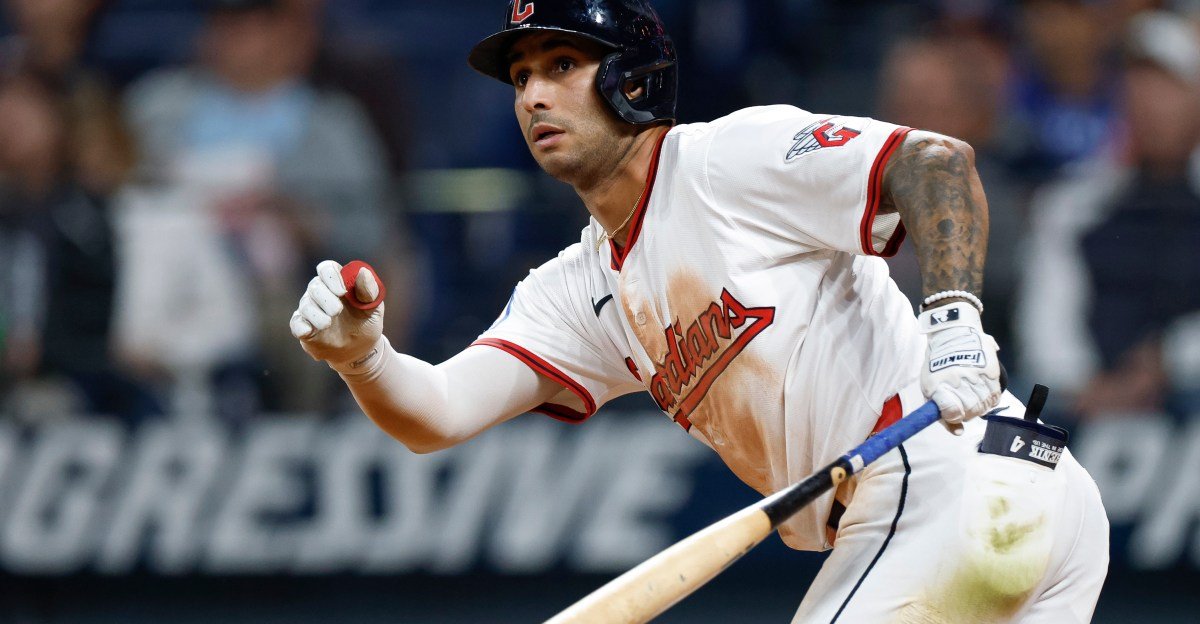
Brayan Rocchio and Gabriel Arias have been given a clear path to establish themselves as middle infielders for the Guardians in 2025 – do we have an answer in second half-Brayan Rocchio?
First, just to mention Arias, he has established that he is an excellent shortstop defensively. With 3 DRS and 4 OAA in 750 innings, he is the kind of player you feel good about being in the field any time the ball is hit to the left side of the infield. Unfortunately, he has shown little to no growth as a hitter. His 78 wRC+, 33.5/5.7 K/BB%, 50% groundball rate and 71.4% zone-contact rate just doesn’t play as an everyday hitter and at a year older than Rocchio with 120 more plate appearances, I don’t see any reason in particular to conclude he is more than, potentially, a glove-first utility infielder.
Rocchio, on the other hand, had a HORRIFIC beginning to the year, but, since his return in July, he has a 98 wRC+, a 19.7/6 K/BB%, and has been solid defensively, mostly at second base. All his underlying numbers look pretty steady for the whole season (48/40/22 fly-ball/groundball/line drive rate, 88 average exit velo, 32% hard-hit rate); the difference is that he is now playing at roughly his expected weight on-base average of about .300.
Rocchio is tracking like Masyn Winn at the plate. In 2025, Winn has a 91 wRC+, .298 wOBA, and 19/6.3 K/BB%. Winn, however, has been absolutely sensational at defense this year (20.2 WAR in Defense). I don’t expect that value from Rocchio, but if he can improve slightly from his 2023 season at shortstop and end up with around 8 OAA as he matures, which would put him at slightly below 3 fWAR. This would make Rocchio a slightly above average major league player.
One of the primary ways I can see Brayan Rocchio improving is getting closer to his minor league walk rate at Double-A-Triple-A of 11.4%. If Rocchio can continue to cut his chase rate (something he has cut by 5% since returning) and his swinging-strike rate (cut by 2% since coming back from Columbus), he should be able to accumulate some more walks AND get himself more pitches on which he can do some damage.
You can see some small changes Rocchio has made below. Here is his approach on March 27th.
Here is his approach this past week:
Some small changes you can observe – a straighter up-and-down approach, a quieter step, and a open-face to take a ball on the outside of the plate to the opposite field as needed. The changes indicate increased confidence and an acceptance that making contact is the strength of his game.
Rocchio does not have an overwhelming tool. His calling card is his range, glove-work and arm accuracy. However, he has displayed enough plate discipline and quality contact ability to give me reason to hope he can be an average hitter. Another offseason to get older and add some more “man muscle” may also be able to help slightly increase his exit velocity. If I were the Guardians, I would be planning for Brayan Rocchio to be the starting shortstop in 2026 and let Juan Brito, Travis Bazzana and Daniel Schneemann (if neither prospect is ready) compete for the second base job next Spring. Good for Rocchio for responding to his May demotion by working hard, getting right and taking advantage of his second chance at proving he belongs in the big leagues.