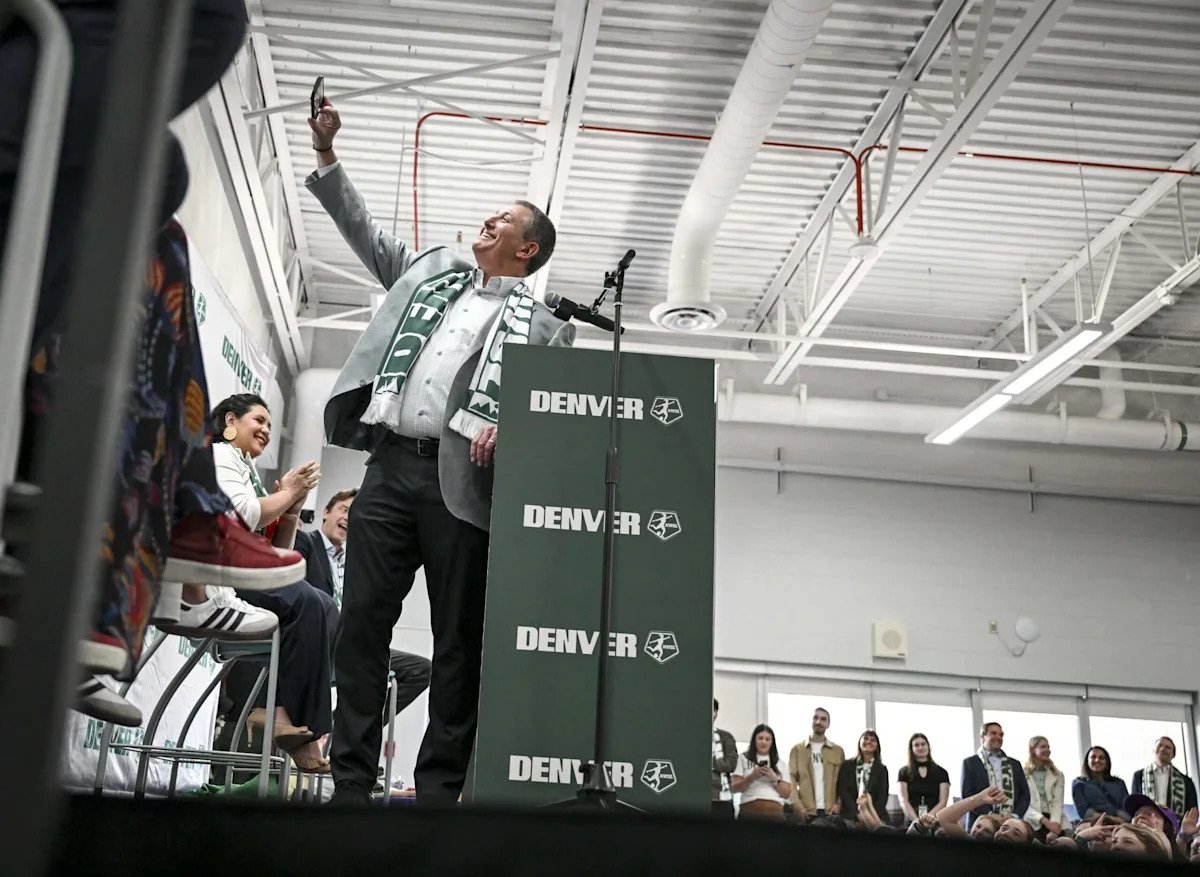
Buying into the National Women’s Soccer League (NWSL) in 2021 was practically a bargain. Bids were judged mainly on whether the city had fans and if the ownership group was serious about running a standalone women’s team. If you had $2 million to invest, it was a no-brainer to buy into the 10-team league.
The NWSL has transformed since then. Expansion fees jumped to $110 million in five years, and infrastructure is no longer a nice-to-have but a must. With soaring valuations— an average NWSL team is worth around $104 million — the pressure to build a successful team is at an all-time high.
Advertisement
By 2026, the NWSL will have doubled in size with Boston Legacy FC and Denver Summit FC joining as the 15th and 16th teams. Even their cover charges differ by $50 million, with Boston paying $53 million and Denver spending a record $110 million to join. And that’s before the stadiums, training facilities and additional bills land.
They also had less than two years to pull it off on a truncated timeline.
“It’s both a blessing and a curse,” Summit controlling owner Rob Cohen told The Athletic. Denver paid the most for its team and has the least amount of time — just 14 months — to prepare for its inaugural season.
“It’s a blessing, because the deadlines and the short timeframe really force everyone to be focused on what’s most important, and making sure that we get things done,” he said. “We don’t have a lot of time to sit around and opine on uncertain things. On the other hand, it’s a curse: it’s a lot to get done in a short period of time.”
Advertisement
The league awarded the franchise to Cohen’s investment group on Jan. 30, 2025. Just 173 days later, eight months before its 2026 debut, the club rolled out its name, crest, and colors, unveiling its brand identity. Three months after that, it surpassed 15,000 season-ticket deposits.
Not bad for a franchise with a little over a year to get off the ground.
“This was a market and a fanbase that had rallied hard to win expansion and bring a club to Denver,” Jen Millet, the club’s president, told The Athletic. Millet came to Denver after helping launch fellow NWSL team, Bay FC, in 2024.
“I’d seen fan excitement before, but the landscape for women’s sports has jumped another level since 2024,” she said. “In Denver, there’s genuine passion: a rich pipeline of talent, a huge youth soccer scene, and a history of sold-out USWNT matches.”
Advertisement
Denver’s solid pipeline of players is nothing short of superstars: Sophia Wilson, Lindsey Horan, Mallory Swanson and Ally Watt are all Colorado natives. The team signed the latter as its first player. Cohen said they will be announcing the roster at the start of the offseason in November. But even with talent and a built-in fanbase, forging a team in less than two years has not been easy.
Cohen’s investor group includes former NFL quarterback Peyton Manning, Olympic skier Mikaela Shiffrin and Ariel Investments’ Project Level, led by Mellody Hobson, among others. Crucially, grassroots advocates, including former U.S. international and Colorado-native Jordan Angeli, have played a leading role in selling Denver as a market. Once they won the bid, the priority was building a strong front office and starting early with multiple infrastructure projects, including a performance center, training fields, community fields, a temporary stadium and the permanent stadium all at the same time.
“I’ll be honest, I don’t think there was anything on the easy list,” Cohen said. “I think the hardest piece isn’t going to surprise people, it’s the infrastructure builds that need to happen in order to play a game 14 months after you’re awarded a franchise.”
While construction brings its own challenges for Denver, filling seats won’t be one of them. With 15,000 deposits already secured, they have surpassed the capacity of both their temporary stadium in Centennial and their future 14,500-seat home at Santa Fe Yards, slated to open in 2028.
Advertisement
As Cohen put it, in the NWSL’s new era, nothing comes easy. When it opens, Denver’s stadium will be the second purpose-built venue in league history, a milestone that underscores commissioner Jessica Berman’s vision since taking the job in 2022: franchises that are strong, independent, and in control of their own homes.
This mantra has drawn a different caliber of investors in recent years who can afford the nine-digit valuations. Lauren Leichtman, co-founder of Levine Leichtman Capital Partners, paid $120 million to acquire San Diego Wave in 2024. Carolyn Tisch Blodgett, from the family behind the New York Giants, bought into Gotham FC in 2023, just before its first NWSL title. And Laura Ricketts, whose family owns the Chicago Cubs, picked up the Chicago Stars for $35.5 million that same summer. In 2024, Willow Bay and Disney CEO Bob Iger joined Angel City FC’s investment group, increasing the team’s valuation to $250 million.
Sitting with reporters last week at the league’s headquarters, Berman made it clear she sees no ceiling. If the NFL and NHL can grow to 32 teams, she asked, why not the NWSL?
At the same time, Berman announced a rule change that could help make that happen. Instead of rigid timelines for franchise bids, the league will now move to a rolling system, giving potential owners the chance to jump in when they’re ready. With more than a dozen groups already in the mix, Berman said the shift should give bidders room to recruit, secure infrastructure investment, and set themselves up for a stronger launch.
Advertisement
That flexibility would have been useful for Boston Legacy, which had two and a half years to prepare for its debut. That’s plenty of time on paper, but short when you add in an infrastructure battle.
Like Denver’s, Boston’s bid hinged on infrastructure. Rather than building a new venue, the group chose to renovate White Stadium in Franklin Park, a publicly owned facility in the heart of the city where the Legacy will play its home games starting in 2027. A group of residents pushed back against the project, citing concerns about accessibility and community use. In April, a Superior Court Justice ruled the renovations, which had been held up in court, were not a violation of the law and could continue.
“It’s going to allow us to achieve our vision, which is our commitment to creating a top-tier facility for our players,” Boston’s controlling owner, Jennifer Epstein, said of the stadium project. “So many women’s teams are treated as the baby sister of a men’s club, sharing stadiums that reflect someone else’s brand. This is a chance to do something different.”
The league’s 2025 NWSL Shield winners, the Kansas City Current, are leading the way with their purpose-built stadium, CPKC Stadium, which hosted the championship last year. “We’ve seen at CPKC how a purpose-built venue can drive revenue and significantly boost club valuation,” Epstein said.
Advertisement
As a top media market, the upside is obvious: a renovated White Stadium gives the club control of matchday experience and revenue streams. And having Epstein in the driver’s seat ensures the team is plugged into the existing machinery of Boston’s sports business.
“No league is complete without Boston,” she said a few days after the team secured a $100 million loan from Bank of America to renovate the stadium.
Boston was one of the earliest U.S. cities to embrace women’s professional soccer. The Boston Breakers joined the Women’s Professional Soccer (WPS) in 2007. After WPS folded, the franchise became one of the eight founding members of the NWSL in 2013. Despite its presence, the team struggled to secure long-term financial stability. After last-minute efforts to sell the club to the New England Revolution’s ownership group and to local real estate developers fell through, the Breakers folded on Jan. 25, 2018, leaving Boston without a team as the NWSL entered its sixth season.
But Epstein did not just have a gut feeling that her hometown could support women’s soccer again; she had the numbers to prove it could thrive. Sports Innovation Lab, one of the companies she invested in through her venture firm, Juno Equity, surveyed the greater Boston area to gauge the market potential for a women’s sports franchise. The results made it clear that the time was right. From the outset, Epstein’s group focused less on grassroots energy and more on institutional stability.
Advertisement
Earlier this year, the club stumbled out of the gate with a poorly received branding launch, the ‘Bos Nation’ campaign, which drew heavy criticism. After months of fan surveys and listening sessions, they landed on their new name.
“Ultimately, those who were the most displeased with our original name launch are now our biggest supporters,” Epstein said. “I wouldn’t recommend saying the strategy when you’re launching an expansion team, but I am certainly proud of the work that we did in response.”
Six months before their inaugural season, with infrastructure settled and lessons from early missteps absorbed, both clubs have shifted focus to the business fundamentals that will define their first seasons.
Denver has already landed its first founding partner, CommonSpirit Health, which also secured naming rights for the club’s performance center. Boston said the team has opened ticket deposits and will begin converting them into full season ticket sales in the coming weeks.
Advertisement
“The difference between launching a club in 2024 and now is that the awareness is just at a different level,” Millet explained. “When you say we are the Denver Summit, an NWSL club, people know what it is. Two years ago, when we would go out and talk to brands, we had to do a ton of upfront work to explain what NWSL was.”
Despite positive changes, Epstein thinks NWSL is still in the “third inning,” or right above the blade of the hockey stick in its evolution.
The biggest caveat is that both clubs are also entering at a time when the NWSL is under more scrutiny than ever. Player safety issues, controversial decisions from league leadership, and the ongoing challenge of retaining U.S. stars who are lured abroad mean the business environment is as complex as it is promising. Both presidents agree the timing is ideal to build franchises in a booming women’s soccer market, but ultimately, success comes down to winning, on the pitch and in the business.
“If you’re in the sports business, you should be in it to win,” Cohen said. “I’ve told everyone our goal is to win from day one. But we all know that most NWSL teams are not making money in the current environment. What we’ve got to do is get creative around revenue streams. That’s part of investing in women’s sports the same way we invest in men.”
Advertisement
(Top photo: Aaron Ontiveroz / The Denver Post)
This article originally appeared in The Athletic.
Portland Thorns, Chicago Red Stars, Houston Dash, North Carolina Courage, OL Reign, Orlando Pride, Gotham FC, Kansas City Current, Washington Spirit, Angel City, Racing Louisville FC, San Diego Wave, Utah Royals FC, Bay FC, NWSL, Sports Business, Women’s Soccer
2025 The Athletic Media Company
Leave a Reply